Open accessibilty tools
Hide menu
← Back to Blog

Festive Traditions

Carols, feasts and gifts.

Winter festivals are thought to have been celebrated from as early as the Roman period – over 2000 years ago!

Over time some things have stayed the same and others have changed. This blog will explore some of these festive traditions.

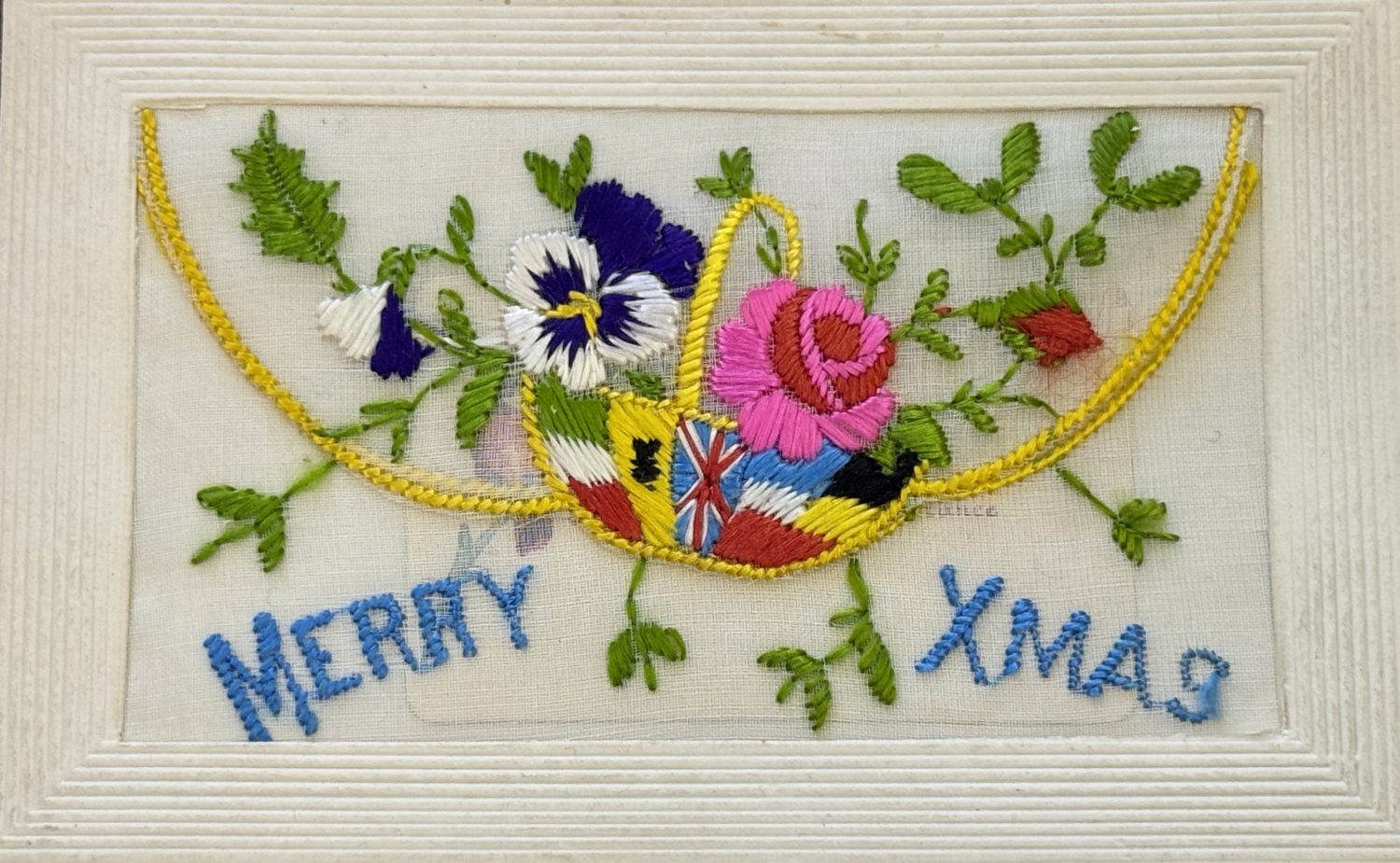
An embroidered xmas card from Museum of Hartlepool's collection. The card has flowers and a basket with various flags. It says 'Merry Xmas'
A hand embroidered Christmas postcard from Museum of Hartlepool’s collection.

Winter has been a time of celebration for many years.
The early Winter Solstice festivals included celebrations such as Saturnalia and Yule.
During these festivals people would enjoy singing, dancing, feasting and giving gifts.

Saturnalia was a Roman festival that was held in honour of Saturn, the Roman god of farming and the harvest. Originally the festival was a one-day event held on the 17th of December with a public feast. However, over the centuries it became longer, running until 23 December, 7 days in total. Can you believe this was over 2000 years ago?

Around 1500 years ago people celebrated Yule, which was originally a pre-Christian festival celebrated by Norse and Germanic peoples. This festival was marked with bonfires and evergreen decorations, as well as singing, and lighting candles or a Yule log, there’d also be gift giving. Yule is still celebrated by Neo Pagans around the winter solstice, the shortest day of the year.
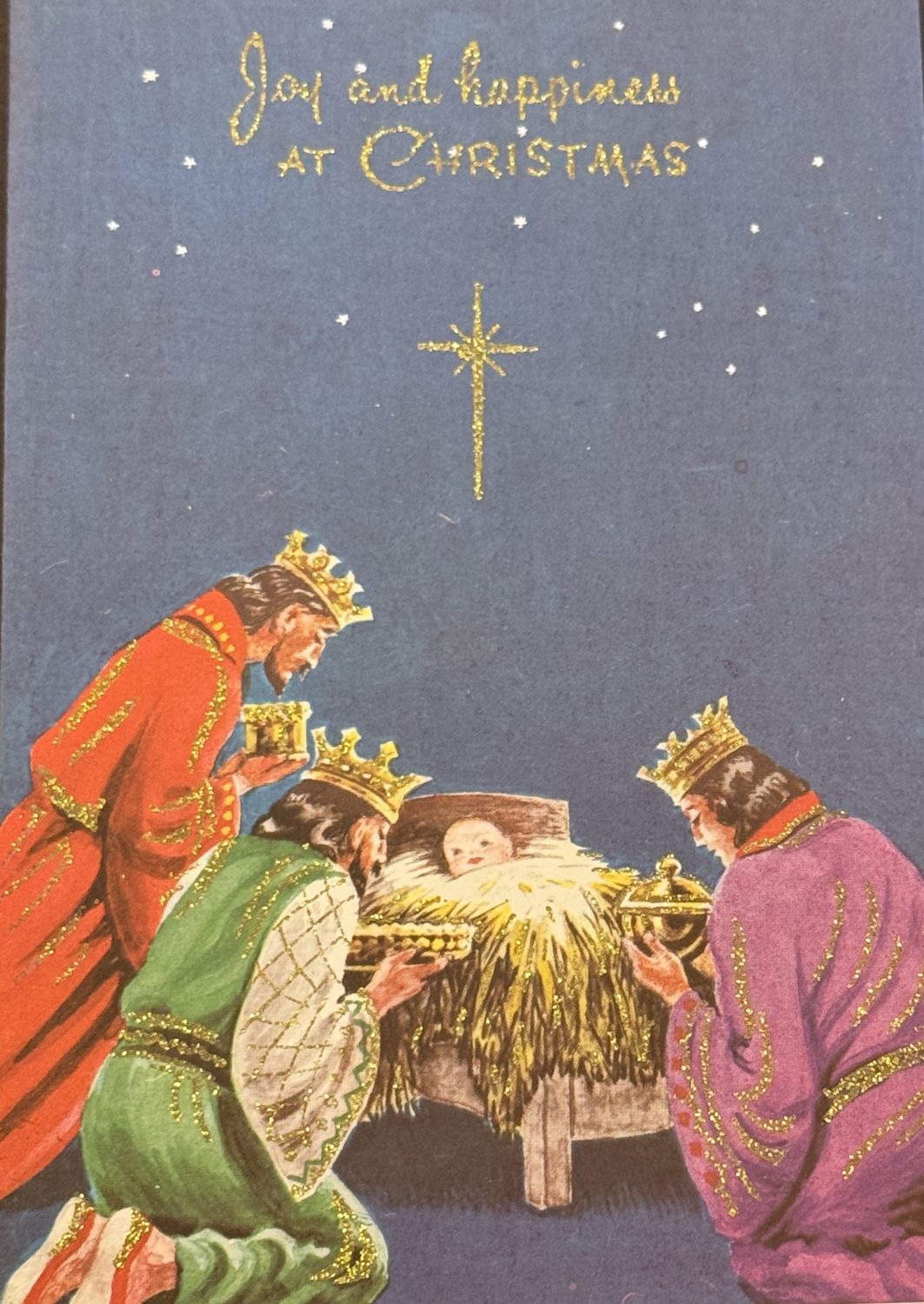
A Christmas card from Museum of Hartlepool’s collection showing the baby Jesus in a manger, surrounded by the three wise men. They are kneeling and presenting gifts to him.

A Christmas card from Museum of Hartlepool’s collection showing the baby Jesus in a manger, surrounded by the three wise men. This is an example of a more religious card.

Christmas has been celebrated on 25 December as the birthday of Jesus for around 1625 years, but did you know that we don’t really know when he was born?

It’s possible that the date chosen to celebrate was linked to earlier festivals, like those mentioned above.  It’s also likely that the date was chosen specially, as it would be familiar to pagans who the early Christians were trying to persuade into switching religion.

Let’s take a closer look at some popular holiday traditions, explored using museum collections.

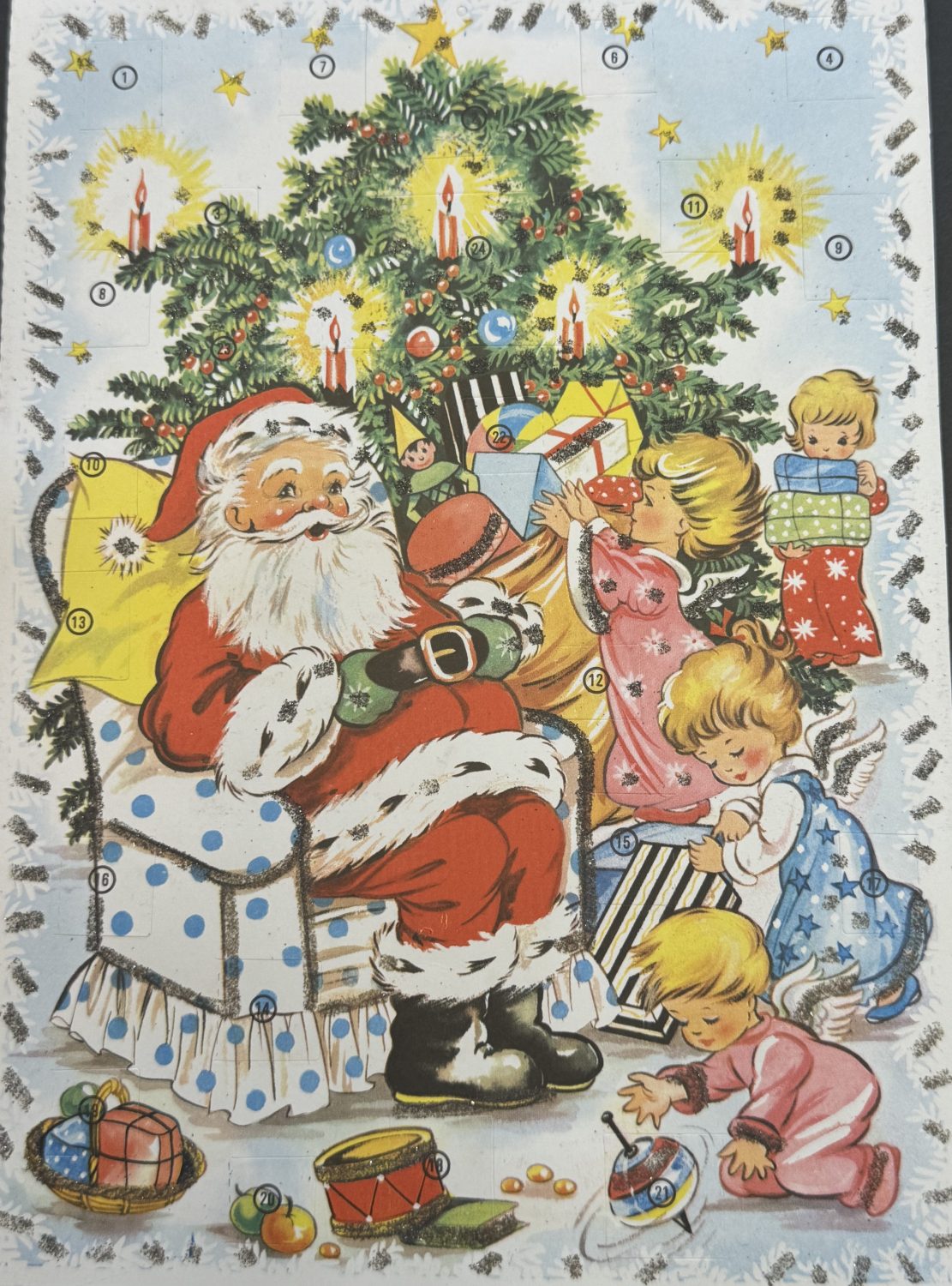
An early advent calendar from Museum of Hartlepool's collection. The calendar shows Santa Clause sitting in an arm chair, surrounded by children with presents. There is also a Christmas tree.

An early advent calendar from Museum of Hartlepool’s collection.
Advent calendars were first used in Germany in the early 1800’s as a way of counting down to Christmas day. Over the years they became more popular in other countries, with lovely designs and hidden treats.

St. Nicholas, but you can call him Santa

Saint Nicholas was a Christian bishop who was known for his kindness. Around 1600 years ago he would give secret gifts and help those in need – so much so that they made him the patron saint of children.

One story tells us how he once gifted gold coins to a family in need; he did this secretly by throwing the bags down the chimney. These coins fell into stockings which had been hung on the fire and started the tradition of hanging Christmas stockings each year.

Another inspiration for Santa comes from the green man, who was part of mid-winter festivals like the ones mentioned earlier in this post.  He dated back to ancient and pre-Christian times as a person who would wear a green, hooded, cloak and head piece, like a wreath made of holly, ivy or mistletoe. He would lift the spirits of people during the cold and dark months.

By the 19th Century, Santa started to be viewed very much like he is today, as a jolly, merry character. One of the main materials responsible for this was the 1823 poem ‘A visit from St. Nicholas’ also known as ‘Twas the Night Before Christmas’ by Clement Clarke Moore.  This image then became even more iconic in 1931, with drawings of him for the Coco-Cola adverts.

Today Santa is the main character of Christmas, he’s shown in the media as living in the North Pole with his elves, where he makes toys for children at Christmas.


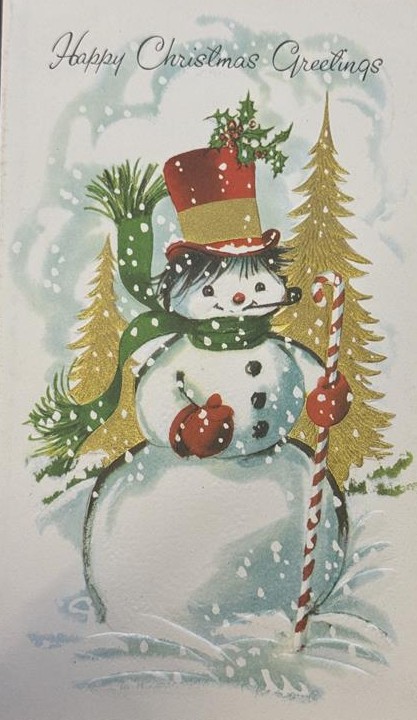
A christmas card from Museum of Hartlepool's collection showing a snowman with a hat, scarf, gloves and pipe. He's holding a red and white stripy candy cane.

A Snowman Christmas Card from Museum of Hartlepool’s collection.

It’s a snow day!

Building a Snowman is a much-loved winter tradition that encourages playfulness and creativity during the colder days. They’re a popular choice for Christmas decorations as well as characters such as Frosty the Snowman.  They’re also used on Christmas cards like the one above.

However, building snow people isn’t the only fun to be had during the winter months.
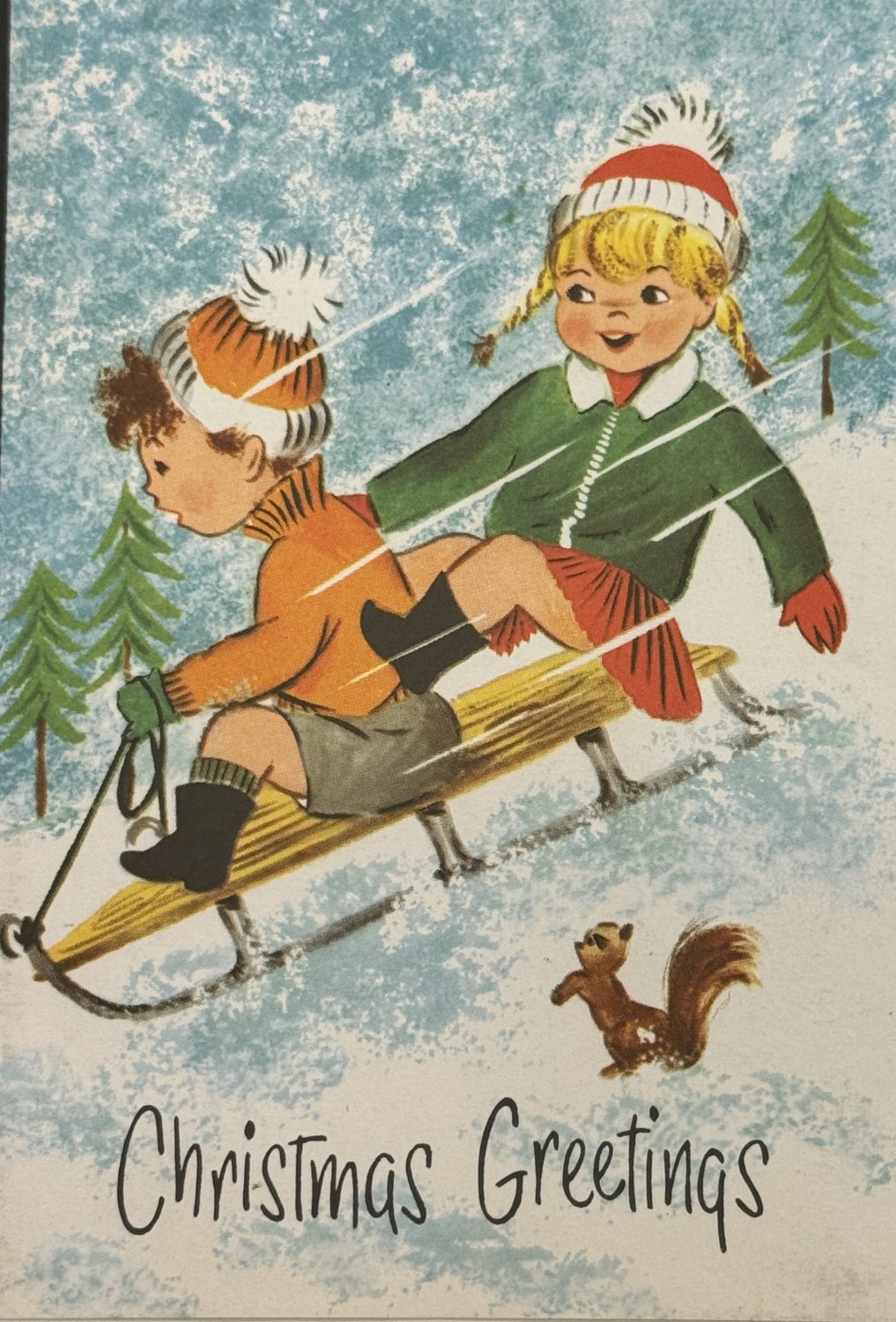
Communities have also enjoyed gathering on hills nearby to enjoy sledging.

What had previously been a tool used by colder countries to get around in harsh winters, became in the 1600’s and 1700’s something which could be used for fun.  There was a rise in the popularity of winter sports over the years and in 1924, the first Winter Olympics were held in France.  Since then, sledging has remained an extremely popular activity for families during snow days.


A Christmas card from Museum of Hartlepool’s collection. The card shows two children playing on a sledge in the snow. There's also trees in the background and a squirrel in the foreground.

A Christmas card from Museum of Hartlepool’s collection. The card shows two children playing on a sledge in the snow.

Christmas Cards

Signed, sealed, delivered. The tradition of sending Christmas cards dates to Victorian times. The introduction of the penny post in 1840 allowed people to send more letters, and further than ever before as it was cheaper to do so.

Sir Henry Cole was a well-known man, due to his popularity and thanks to this cheaper way of sending mail, he received a lot of letters. Henry wished for a solution to the time it would have taken to write back to his many friends, and so he requested the help of an artist John Callcott Horsley to create a greetings card. Once printed, these cards were also offered to others, so that they too could send their own cards to friends and family.

People took inspiration from this and started to make their own Christmas cards.

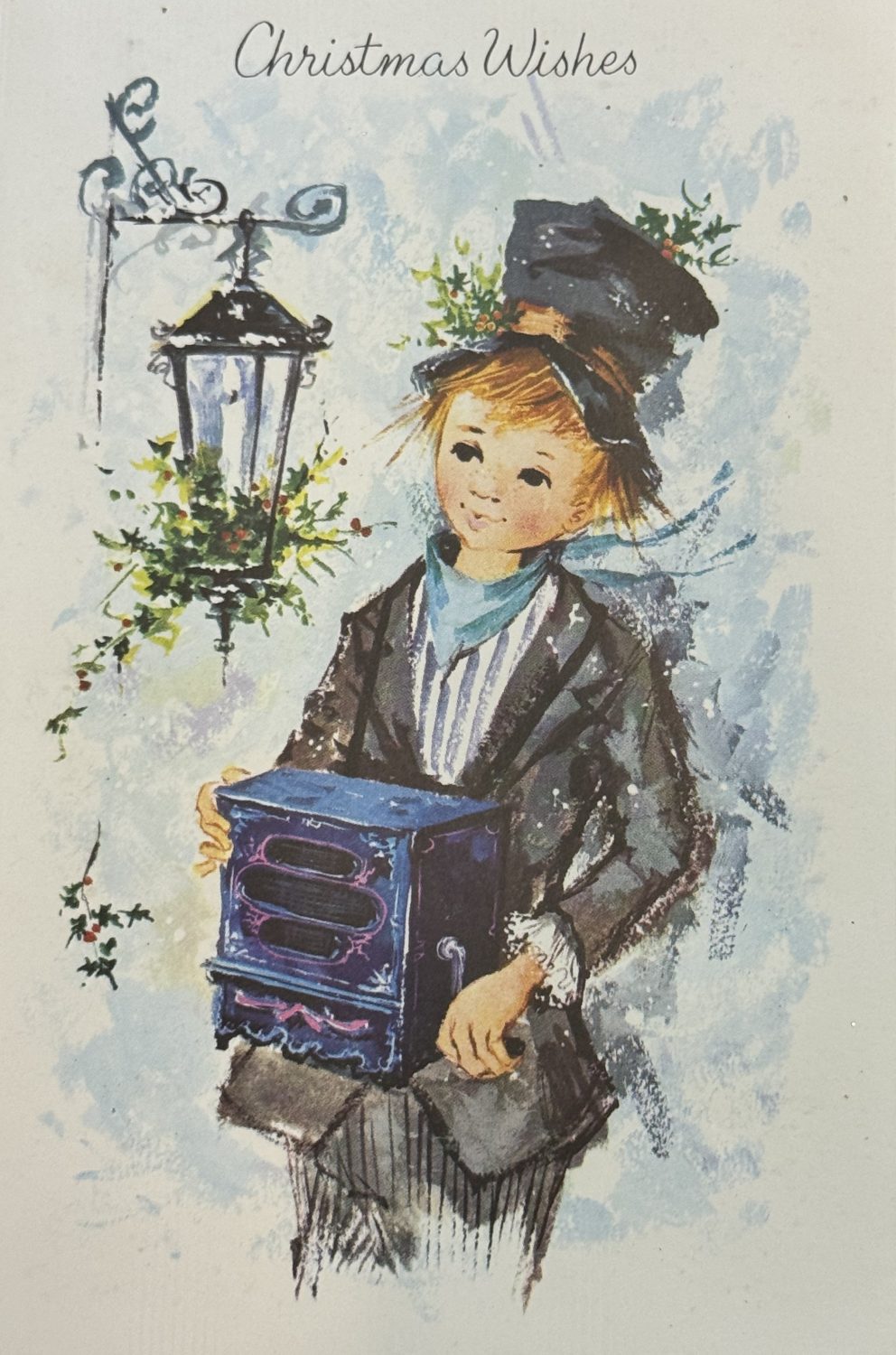
A child holding a musical box. Part of a Christmas card from the Museum of Hartlepool's collection.

A Christmas card from Museum of Hartlepool’s collection.
The card shows a young boy, standing with a musical box. Perhaps he’s about to sing a song.

A Christmas Carol

Carols can be traced all the way back to when singing and dancing was used to celebrate the winter festivals and keep peoples spirits high. People would dance in a circle with linked hands as they sang songs.  Many Christmas carols that survive today are from the 15th century; they’re one of the best-saved examples of English medieval music.

Today, carol singers go from door to door or often sing in choirs at local events.
You can enjoy this experience throughout December at Preston Park Museum & Grounds, where community choirs often sing on the Victorian Street.

What festive traditions are important to you?

We hope that you enjoyed our festive blog – we’ll see you in 2026!