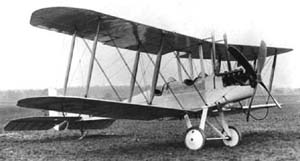
Those on the ground began firing with anti-aircraft guns, and other defences in the form of RAF biplanes arrived. One of the pilots was a 20-year old Sub-Lieutenant Ian Pyott, originally from Port Elizabeth in South Africa, he was studying in Edinburgh at the outbreak of war and enlisted into Royal Flying Corps. Pyott had only just finished his training three months prior, and had been stationed at Seaton Carew when the call came for him to board his biplane, flying solo in order to conserve fuel, and defend the North East.
The Zeppelin began dropping bombs on Elwick, in an attempt to put out the searchlight and also to release some weight in an effort to dodge the guns and biplanes. Pyott made his first attack, opening fire and then diving underneath the craft. His bullets had failed to find an opening.
Thirteen bombs fell on Elwick, but only landed in nearby fields and caused insubstantial damage. The Zeppelin started making its way over West Hartlepool, dropping six more bombs on the outer suburbs and being picked up by a third searchlight.
Pyott meanwhile decided to take a different approach and flew his biplane parallel to the aircraft for around 5 miles, slowly sneaking up and getting into position for a second attack.
As the Zeppelin approached the more built-up areas of West Hartlepool, it targeted Hart Road, Hartley Street and Lowthian Road, dropping 29 bombs. This attack resulted in the deaths of 4 people and injured seven others and four children. At least 15 houses were destroyed and more received structural damage.