Open accessibilty tools
Hide menu

Talking about objects

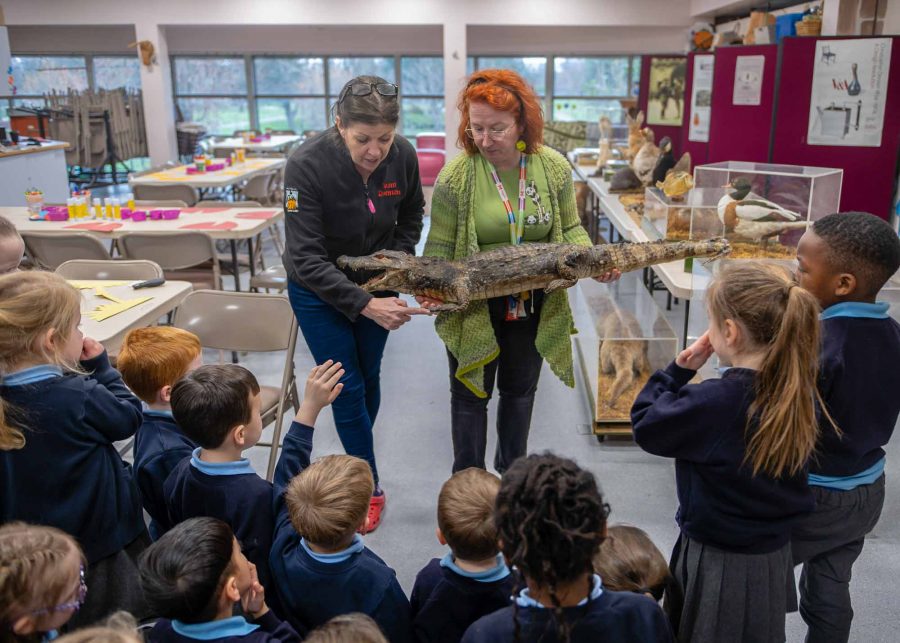
Two Learning officers show a group of school children a stuffed aligator


Introduce museums as places that are full of important objects that can help tell a story. Many objects are really old. Some are very delicate and will break easily. Museum objects are very precious, even if they look very old and broken.

Working with  objects can be really exciting. They can spark imaginations and initiate conversations. Objects introduced to a class in an interesting way can offer opportunities to extend and develop children’s understanding of the world through first hand experiences.  Ask open ended questions and and allow for speaking, listening and sharing of thoughts and ideas.

Have a look at some of the objects in a museum in a short video (coming soon)

Where can I get hold of objects?

This toys resource is a great starting place to look at the kind of toys children would have played with in the past.

Borrow a loan box and talk abut some of the old objects in there. Toys and seaside loans boxes, for example, are available from many museums and would be a good hook for EYFS.

Charity shops can reveal plenty of unusual and inspiring objects around a variety of themes.

Objects from home can often enhance a class collection and can support individual engagement. A loan form recording individual loans from home could simulate the museum procedure.

Story books can embed the importance of objects through a chosen EYFS theme.
Suggested story books include:

  • Too many toys (Heidi Deedman)
  • A house that once was (Julie Fogliano)
  • Lost in the toy museum (David Lucas)

It will be important to make sure all objects are safe to use and well cared for in your own class environment. It may be necessary to have some objects that can be used under supervision only to avoid any upset and damage.

The activities below start off by introducing individual objects before introducing whole collections. As children grow used to working with collections of objects they might recognise that old things can sometimes be shiny, and new things can sometimes be broken.

When introducing objects to the class, why not use a collection linked to your current class topic? Encourage children to build up on the original collection by creating pictures, finding story books from the book corner, and other related toys from around the classroom.

Suggested activities

  • Feely bag -pass a mystery object around in a feely bag. Each child should come up with a word or phrase to describe what they can feel. This can be further extended by giving suggested sentence starters for children to complete as part of a class participation activity such as “I wonder”, “I think”  or “What if.”
  • Can you think about the oldest object in your house and draw a picture of it with labels?
  • Think about who used to own a particular object. Can you draw a picture of the object how it might have looked in the past.


  • Have children collect or draw objects around a theme from around the classroom for example toys, dinosaurs or even hats.
  • Object sorting – can you sort out a selection objects or images in different ways? The old and new objects?  objects made from different materials?  Heavy and light objects? Sharp and smooth objects?
  • Looking closer. Which objects have been well used? Are there any bumps, dents or bald patches on there?

Caring for objects is a really important job. Introduce the term “curator” to the children, and their role in sorting the objects out so they don’t get lost or broken.

Suggested activities

  • Discuss the importance of caring for objects. Handling them with care and being careful not to drop them. Why not have someone demonstrate how to carefully handle an object for the class. Some children in the class could be given a curator responsibility and help others to look after the objects, especially if you have some more fragile objects in your class collection.
  • Look at different packaging materials, and how objects can be stored carefully. Introduce wrapping and unwrapping objects in tissue paper and storing them safely in boxes.
  • Why not have children create a list of objects in the class collection. Use post it notes to label the objects and the boxes.