Open accessibilty tools
Hide menu

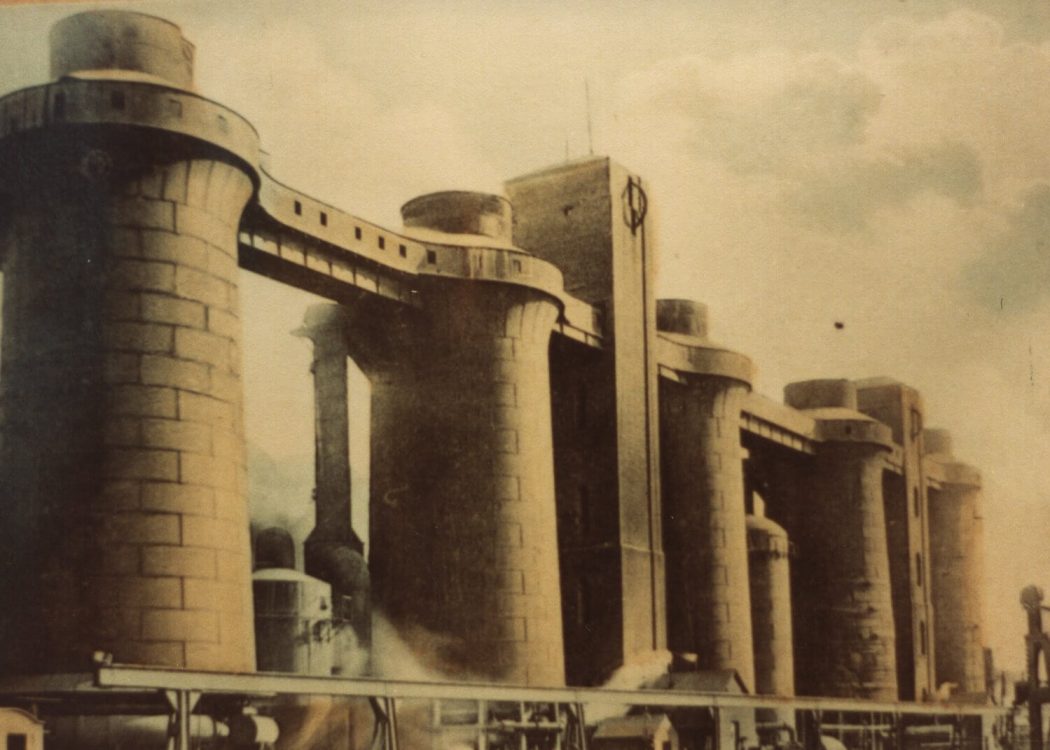
Skinningrove blast furnaces, 1874

This photograph shows the five original blast furnaces and pig beds at Skinningrove Iron Works that opened in 1873. The ingredients to make useable iron were limestone, ironstone, coke and air. The coke provided the fuel for heat and the air made sure the coke kept burning. The limestone helped to separate the iron from the impurities in the ironstone and would be tapped off as ‘slag’. Once the mixture had been heated for the required period and the slag tapped off, the molten iron could be allowed to flow out from the bottom into sand gullies called ‘pig beds’, hence the term ‘pig iron’. Once cooled, the ‘pigs’ of iron were taken to steelworks and iron foundries in Durham and Middlesbrough.

Image courtesy of Cleveland Ironstone Mining Museum

More objects from the same theme

A black and white image of 5 men within a mine. Two men are seated at the front and three standing at the back. The man back far left is holding a stick, that is as high as his shoulders in his right hand and a miner's lamp in his left. The other two men at the back and one front right are holding pickaxes. To the left of the group is the dug out wall of the mine. To the right are three pit props with stacked stones behind them.

Loftus miners, Skinningrove

A group of loftus miners, including children

Group of Loftus miners with children, Skinningrove

A a blue enamel cylinder with an upturned blue enamel cup as the lid. The lid or cup also has a small round handle. The enamel has been lost off the side of the lid in 2 places. On the right hand side of the tin, just underneath the lid is a small enamel loop with string looped through. This string goes behind the bait tin and the 2 ends are seen on the left hand side at the bottom of the image.

Ironstone miner’s bait tin

An open book. At the top is written 'Report and Prticulars of' on the left hand page and 'Accidents at Loftus Mines' on the right page. Below this the page is split into 19 columns of various widths. The column and header lines are in red. Each line within each column has black hadnwriting with particular details about the incidents. Only one column is left blank, but the writing is too blurred to make out what the heading is.

Loftus Mine accident book

In the centre of the image stands a cylindrical miner's lamp. It has a tarnished metal base with a band of brass at the top. On top of the base sits a cylindrical glass tube held in place by brass fittings. Above the glass tube is a wider black cylinder with vertical markings. It has a thin black metal handle with only part of it visible. To the left of the lamp is a blurred image of a black object. In the background is a blurred blue image with white rectangles.

Flame safety lamp

A sepia photograph taken from a high view point. In the valley below is horizontal rows of housing. Behind this is a hillside covered in farmers fields. At the top of the hill is the Skinningrove mine. At the bottom of the image in written in white handwriting is Skinningrove from the cliffs.

Skinningrove from the cliffs

Black and white photogrpah of miners with a full mine cart. The wooden minecart is in the centre of the image. Three men stand left, right and behind the cart. The man on the left appears to be in very bright light. Only the head of the man is visable behind the cart and the man to the right of the cart must have moved as the photograph was being taken as he has an extra half added to his face and an elongated left hand and arm.

Fillers with tub, Skinningrove

Black and white portrait of Joseph Pease standing in the centre of a grand room with a patterned carpet. Behind him is a stone archway with a church in the distance. Joseph has wispy white hair and sideburns that continue under his chin. He is wearing a dark suit and waistcoat. In his right hand is a cane. To his left is an ornate chair with his upturned top hat on the cushion. To his right is an ornately carved wooden bench with a full length curtain draped against it.

Joseph Pease

North Terrace, Loftus

Spar Arch, early 20th century