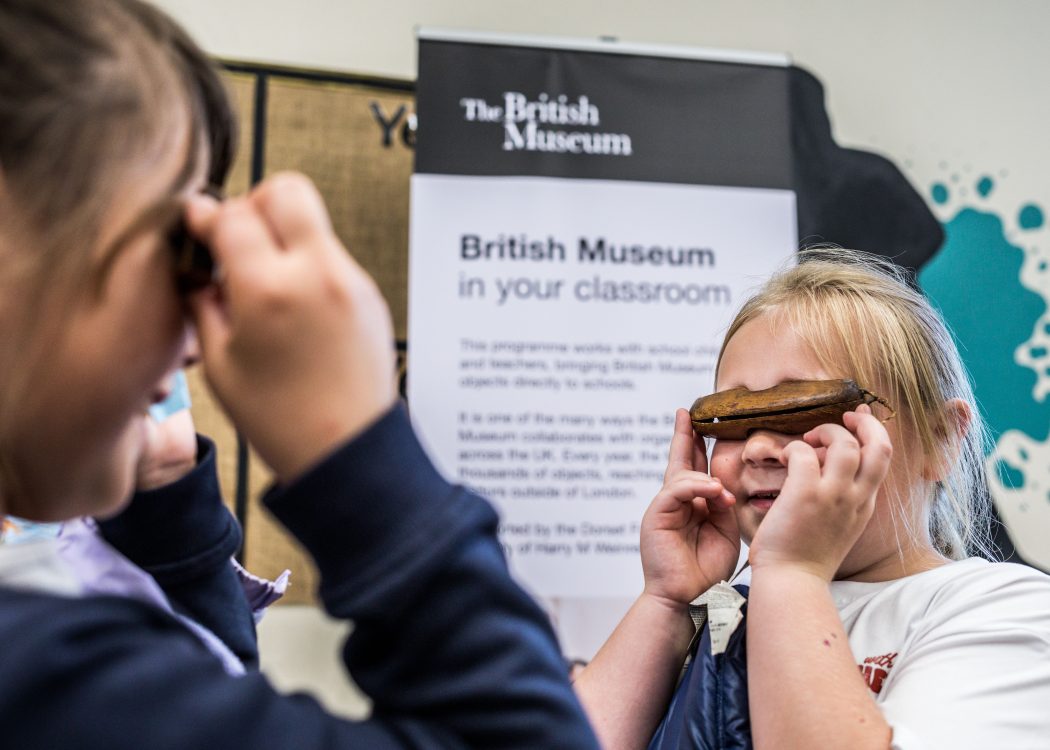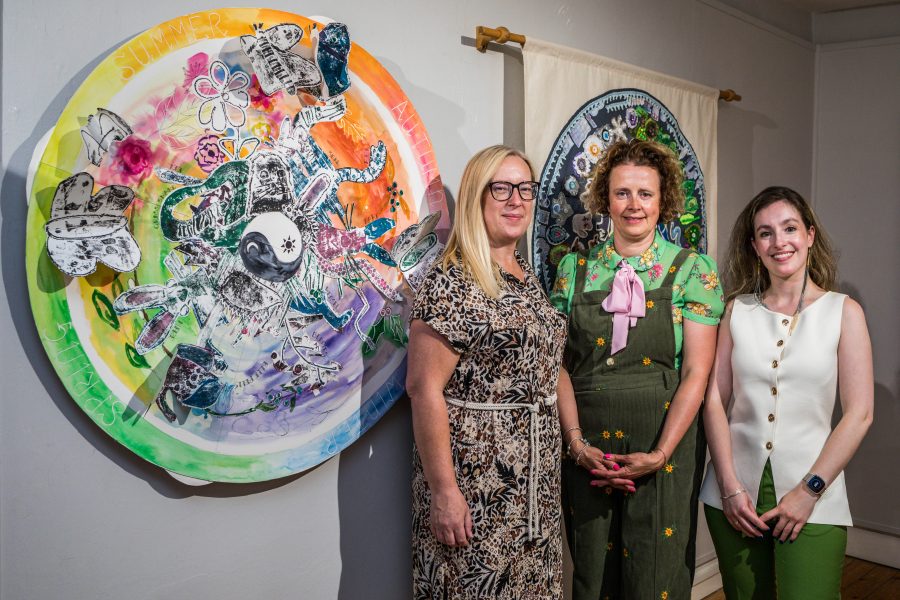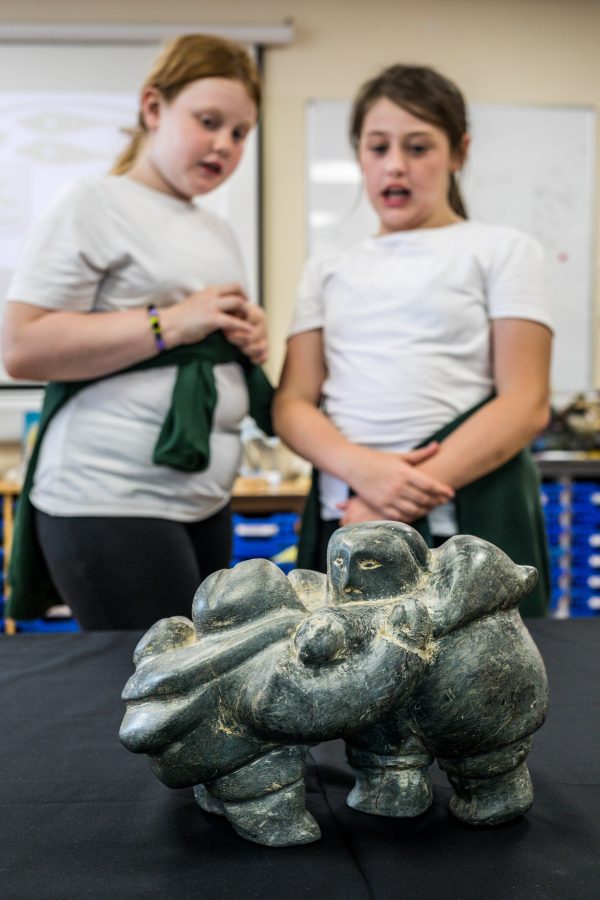
Museum in Your Classroom, Errington Primary School, Marske. Photograph: Stuart Boulton/British Museum.
Using authentic objects to support learning
This project aimed to give children ownership of their work, and extended their learning beyond the classroom. The structure gave pupils a sense of purpose allowing them opportunities to share their knowledge in real-world contexts. It also gave primary age pupils an opportunity to discover career possibilities such as curators, artists or even explorers.
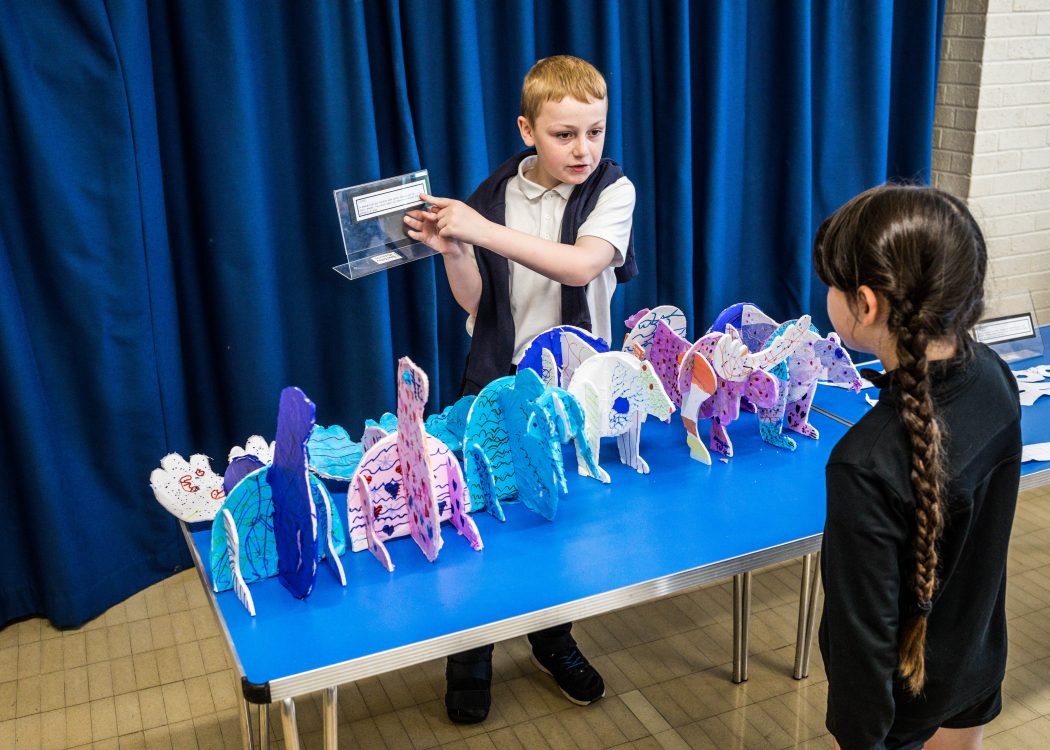
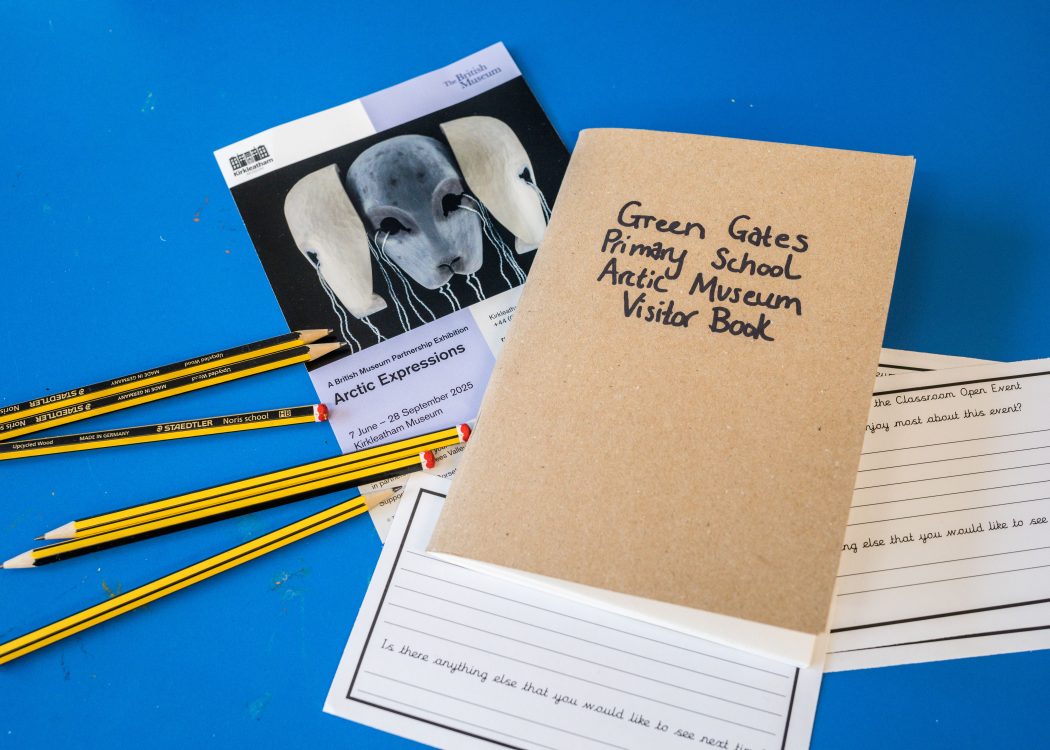
The children’s work culminated in each class creating their own museums at school for family and peers to visit. Some of the children’s artwork was subsequently exhibited alongside the British Museum’s Arctic Expressions exhibition at Kirkleatham Museum.
Polar Worlds and North America class topics
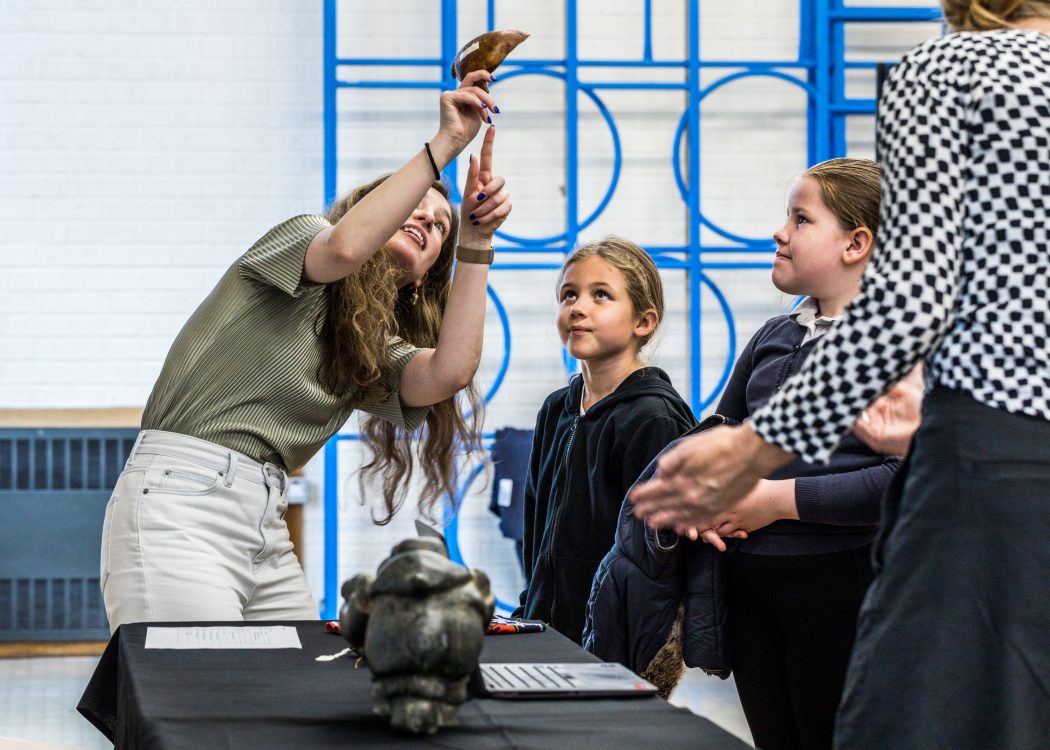
Both classes were studying the polar regions. Their topics were supported by zoom calls into the classroom by curators from the British Museum. Classes also had an opportunity to meet two professors from Durham University who travelled regularly to the Arctic to work with the indigenous communities there.
A polar Medal from the collections at Preston Park was also brought into each classroom inspiring children to compare survival of explorers in the polar regions with the lifestyles of Arctic communities both from the past and present.
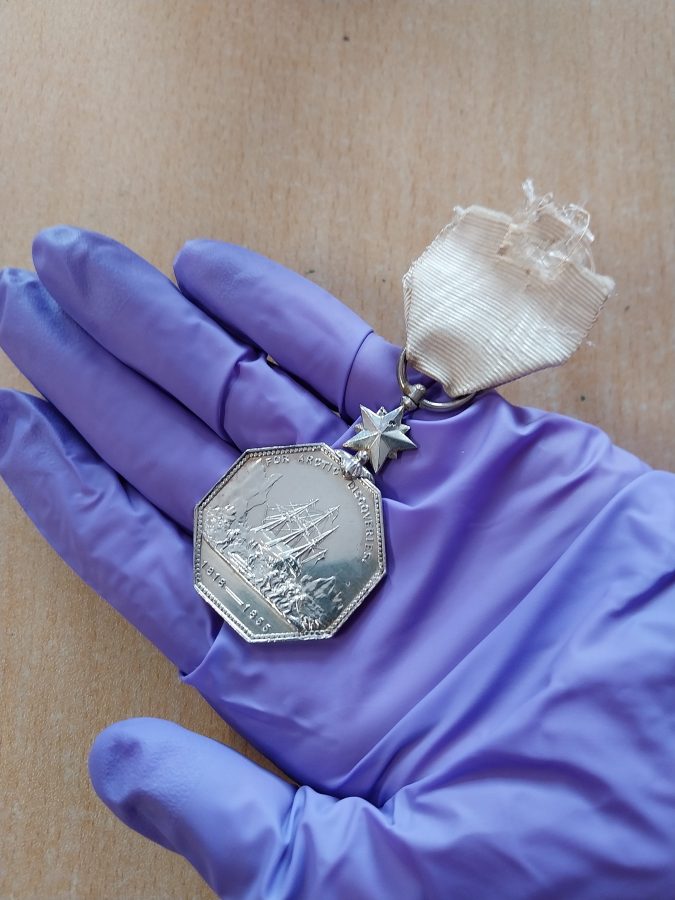
polar medal from the collections of Preston Park Museum.
Working with local artists and appreciating Our Beautiful Land
Each school received a life-sized replica of a print from the collections of the British Museum. Created by Nunavut artist Kenojuak Ashevak, titled Our Beautiful Land, this artwork became a powerful stimulus for learning, inviting children to explore themes of environment, culture, and change. Pupils were able to use the detailed print to identify the seasonal changes experienced in the arctic; from light to dark, from sled journeys to canoe travel, and from igloos to tents made of animal skins. These details sparked rich classroom discussions, prompting questions about how people adapt to their surroundings and how climate change continues to shape life in the Arctic today.
The learning journey didn’t stop there. Pupils drew comparisons between the Arctic and their own “beautiful land,” reflecting on the landscapes, wildlife, and landmarks that define their local identity. Working alongside local artists, they translated these ideas into a collaborative creative response—a whole-class artwork that celebrated their home environment while echoing the themes of Ashevak’s print.
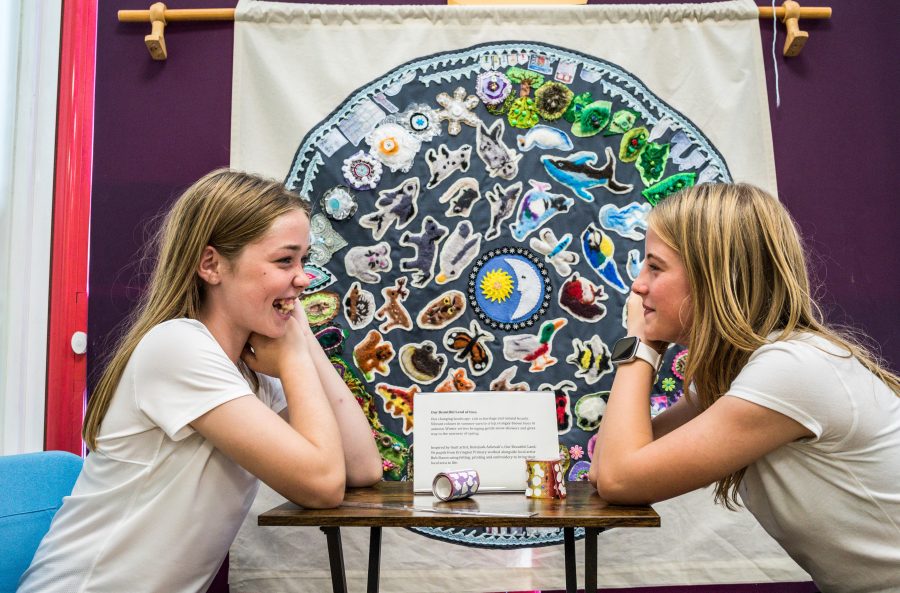
Pupils sit in front of their class artwork interpretation of Ashevak’s “Our Beautiful Land.” (By artist Bub Bacon)
Friends and family visit the school museums
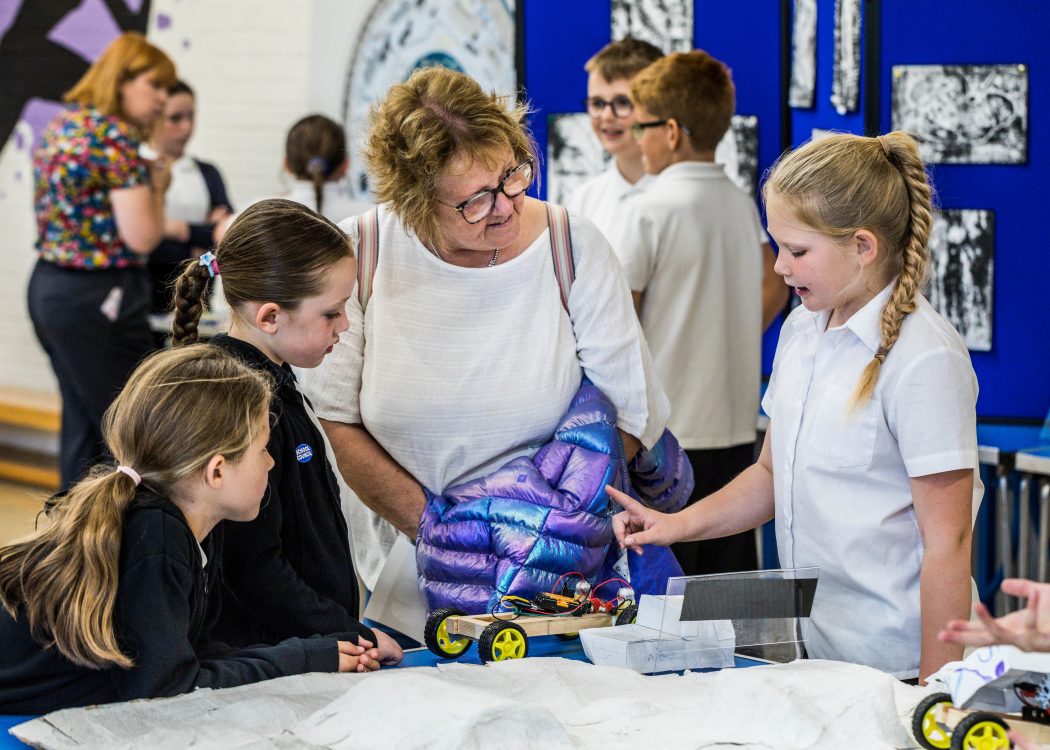
Children invited their families to their school museums. All classes from each school had an opportunity to see the museum and even classes from local schools walked across to visit.
Children spoke proudly about their work and shared their knowledge as they took on their roles as curators and guides. Families engaged with the school exhibitions. Teachers rediscovered the joy of cross-curricular teaching, and museum staff became active participants in the learning journey.
This learning journey has been a reminder of the potential of cultural partnerships and creativity in schools. It demonstrates how authentic experiences can inspire curiosity, deepen understanding, and create lasting memories for pupils and educators alike.